Showing posts with label Car Review - E.V - Cars. Show all posts

Sunday, 12 January 2020

AutoWriter

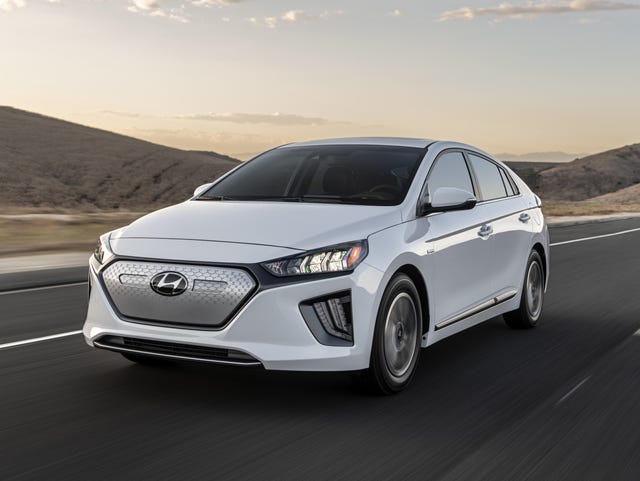
The 2020 Hyundai Ioniq Review

By  
2020 Hyundai Ioniq
  • Highs: Affordable pricing, generous standard equipment, excellent efficiency.
  • Lows: EV only sold in select states, plug-in hybrid needs a stronger electric motor, refinement could be better.
  • Verdict: Easy on your wallet and the environment.

Overview

If you're looking for an efficient alternative to a conventional gas-burning car, the Hyundai Ioniq likely has something to pique your interest with its three available powertrains. The Ioniq hybrid is more efficient than the Toyota Prius with an EPA city/highway combined rating of up to 58 mpg. While the different powertrains give each Ioniq model unique characteristics, every version is packed with features that make it a great value, including a standard 8.0-inch infotainment screen with Android Auto and Apple CarPlay compatibility. Refinement isn't the Ioniq's strong suit, though, and there are several compelling alternatives. The Honda Insight is more pleasant to drive, the Toyota Prius can be equipped with all-wheel drive, and the Corolla hybrid costs less. All of these competitors deliver similar efficiency as the Ioniq Hybrid.

What's New for 2020?

The Hyundai Ioniq Electric receives significant powertrain updates for 2020. Horsepower increases from 118 to 134 hp, a larger battery pack improves range from 124 to 170 miles, and a more powerful 7.2-kW charger shortens recharge times. The hybrid, plug-in hybrid, and electric models also receive a refreshed exterior and interior design for 2020, with the standard infotainment screen growing from 7.0 to 8.0 inches. Hyundai's SmartSense driver-assistance system is also new to the Ioniq range. It is standard on all Ioniqs and includes forward-collision avoidance, driver-attention warning, automatic high-beams, and lane-keeping assist.
Advertisement - Continue Reading Below

Pricing and Suggestion

  • Hybrid: $23,930
  • Plug-in hybrid: $27,230
  • Electric: $31,000 (est.)
We'd skip the Ioniq plug-in hybrid, as its weak 60-hp electric motor means the gas engine often fires up to keep pace with city traffic, even when the battery is fully charged. The longer range of the 2020 Ioniq Electric makes that model a much more compelling purchase than in the past, but it's only sold in fourteen states. Our pick is the Ioniq hybrid, which is as affordable as it is thrifty. While the base trim, called Blue, is nicely equipped with dual-zone automatic climate control, SiriusXM satellite radio, and a proximity key, we'd spring for the mid-level $25,880 Ioniq SE hybrid. It adds luxuries such as heated front seats, a 10-way power-adjustable driver's seat, and a leather-wrapped steering wheel.

Engine, Transmission, and Performance

The Ioniq hybrid isn't quick, requiring 8.9 seconds to accelerate from zero to 60 mph. Shift timing isn't perfect in Eco mode; the transmission pauses too long to downshift when you want to accelerate. The Ioniq Electric doesn't feel as zippy as the Chevy Bolt from standstill, forcing the driver to dip deeper into the throttle to achieve the instant zoom that makes EVs so appealing. The plug-in hybrid Ioniq's combination of a 1.6-liter four-cylinder engine, electric motor, and six-speed dual-clutch automatic transmission will be familiar to fans of the Ioniq and its cousin, the Kia Niro. The Ioniq holds its own on curvy roads, responding obediently to steering inputs and maintaining a firm grip on the road. If pushed hard in corners, the body leans, but overall the car feels stable and competent in most every situation. Pleasantly surprising are its composed ride and relaxed highway manners. All Ioniqs have steering-wheel paddles that you can use to modulate the level of regenerative braking, allowing drivers to approximate the one-pedal driving style that Tesla has popularized among EV cognoscenti.

Range, Charging, and Battery Life

The good news is that the plug-in Ioniq charges quickly at a 240-volt outlet, requiring a bit more than two hours to restore full charge. If a 120-volt outlet is all that's available, a full charge will take slightly less than nine hours. The Ioniq Electric is rated at 170 miles of EV range, with an EPA-estimated 145 MPGe in the city and 121 MPGe on the highway, making it more efficient than many EV competitors. The plug-in variant is rated by the EPA to provide up to 29 miles of combined electric driving range.

Fuel Economy and Real-World MPG

The base Ioniq Blue model is the most fuel-efficient hybrid on the market. The Ioniq Limited we tested fell 2 mpg short of its EPA estimate during our test, but it's still one of just a few cars we've tested that have topped 50 mpg. In our real-world testing, the plug-in did about as well as its closest competitors in our set of highway tests, but it failed to live up to the promise of its EPA ratings.

Interior, Comfort, and Cargo

The Ioniq's cabin is comfortable and attractive even in base trim, and it can be well-appointed in more expensive versions. Adding to its green cred, Hyundai sourced sustainable materials for the Ioniq's interior, using composites made of sugar cane and volcanic rock. While the rear seats won't inspire outrage on the part of your passengers, several competitors offer more room to spread out. The Ioniq fits about as much luggage as other members of its class and more than some larger competitors. Interior cubby storage lags behind competitors, but Hyundai has employed some clever tricks to maximize what space is available. The plug-in version gives up four cubic feet of cargo space compared with the hybrid model. You can blame the larger battery pack for the deficit, but it shouldn't be a deal breaker.

Infotainment and Connectivity

Even base models come with an 8.0-inch touchscreen infotainment system, Apple CarPlay, Android Auto, and auxiliary and USB ports—swank accommodations for an entry-level model. Top trims use a 10.3-inch screen that includes navigation. Hyundai's touchscreen interface is easy to use and performed well in our tests.

Safety and Driver-Assistance Features

The Ioniq hybrid and plug-in hybrid were named Top Safety Picks by the Insurance Institute for Highway Safety (IIHS), but none have been tested by the National Highway Traffic Safety Administration (NHTSA). Every Ioniq comes standard with a bevy of driver-assistance features, while upper trim levels include even more active-safety equipment such as an ability to detect pedestrians in the car's path. Key safety features include:
  • Standard forward-collision warning and automated emergency braking
  • Standard lane-departure warning and lane-keeping assist
  • Available blind-spot monitoring and rear cross-traffic alert

Warranty and Maintenance Coverage

Hyundai's excellent warranty is one of the best in the industry. The Ioniq bolsters it with a lifetime battery warranty for the original owner, which aims to curb concerns about expensive battery repairs.
  • Limited warranty covers 5 years or 60,000 miles
  • Powertrain warranty covers 10 years or 100,000 miles
  • Hybrid components are covered for 10 years or 100,000 miles
  • No complimentary scheduled maintenance
Read More
AutoWriter

Jeep Shows Wrangler, Renegade, and Compass 4xe Plug-In Hybrids at CES

By  

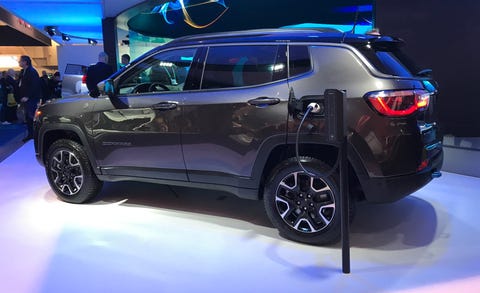
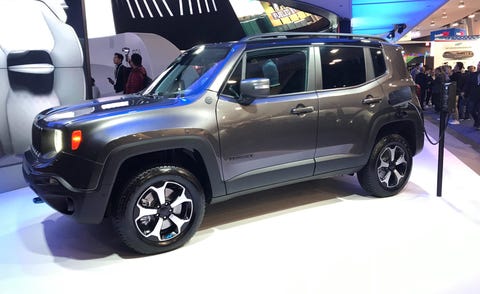
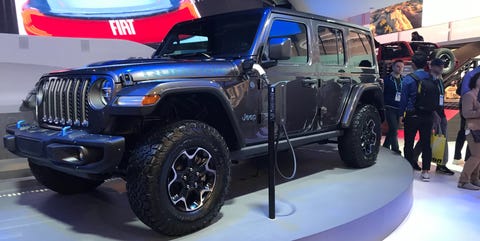
Jeep has unveiled its new lineup of plug-in hybrid models at CES, which will be badged 4xe. The company isn't providing any details about these new versions of the Wrangler, Renegade, and Compass yet. More information will be available later this year at the New York, Geneva, and Beijing auto shows.

Jeep announced the name of its new 4xe plug-in hybrids last week, and now it's showing them off in the flesh at the 2020 CES technology show in Las Vegas. Unfortunately we can't get the company to share any details about the powertrains, but a look at them up close shows what differentiates them from the outside.


The most obvious clue is—no surprise—the charging port seen on the front fender of the Wrangler and the driver's-side rear quarter-panel of the Compass and Renegade. There are also blue accents to differentiate these models and different badging.


Jeep has previously given information about the Europe-market versions of the Renegade and Compass plug-in hybrids, which produce a total of 240 horsepower from a turbocharged 1.3-liter inline-four gasoline engine combined with an electric motor. We don't know how those specs compare to the U.S.-market versions of either Jeep but will bring further details as soon as they're available.
Read More

Friday, 10 January 2020

AutoWriter

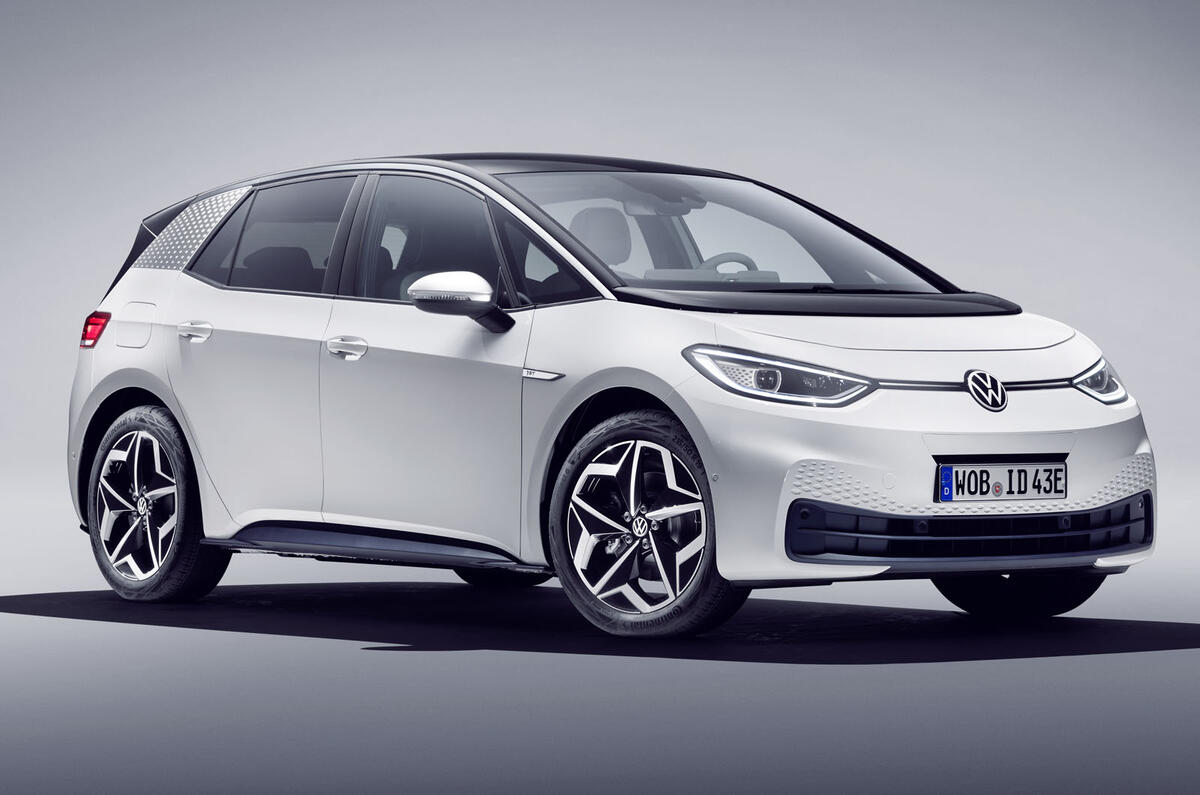
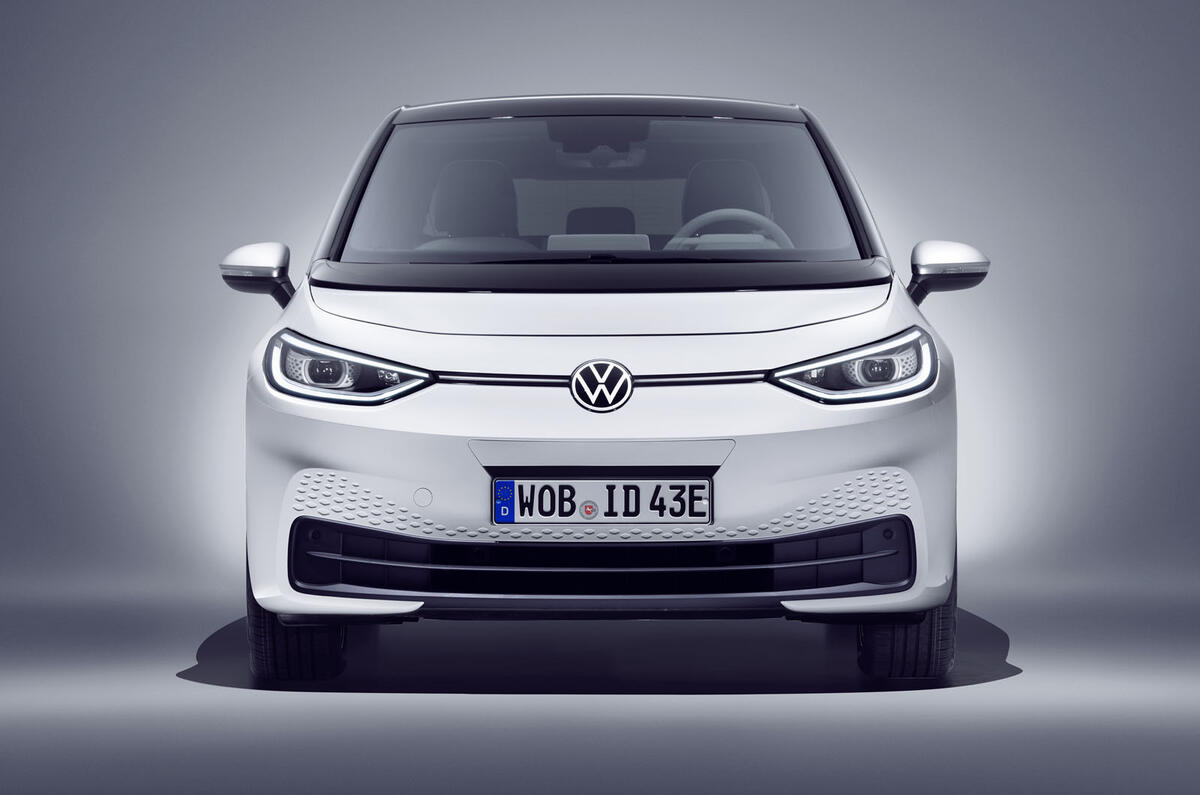
Volkswagen ID 3: vital EV revealed with up to 341-mile range

By  


The wheelbase is 145mm longer than a Golf’s and just 21mm shy of a Passat saloon’s

VW claims the rear-wheel-drive ID 3 will have ‘intuitive handling’ and ‘phenomenal performance’

ID 3 is the first car to use VW’s new MEB platform

ID 3 will launch with the 1st edition, powered by a 58kWh battery

First ID car has an uncomplicated design and only one trim level

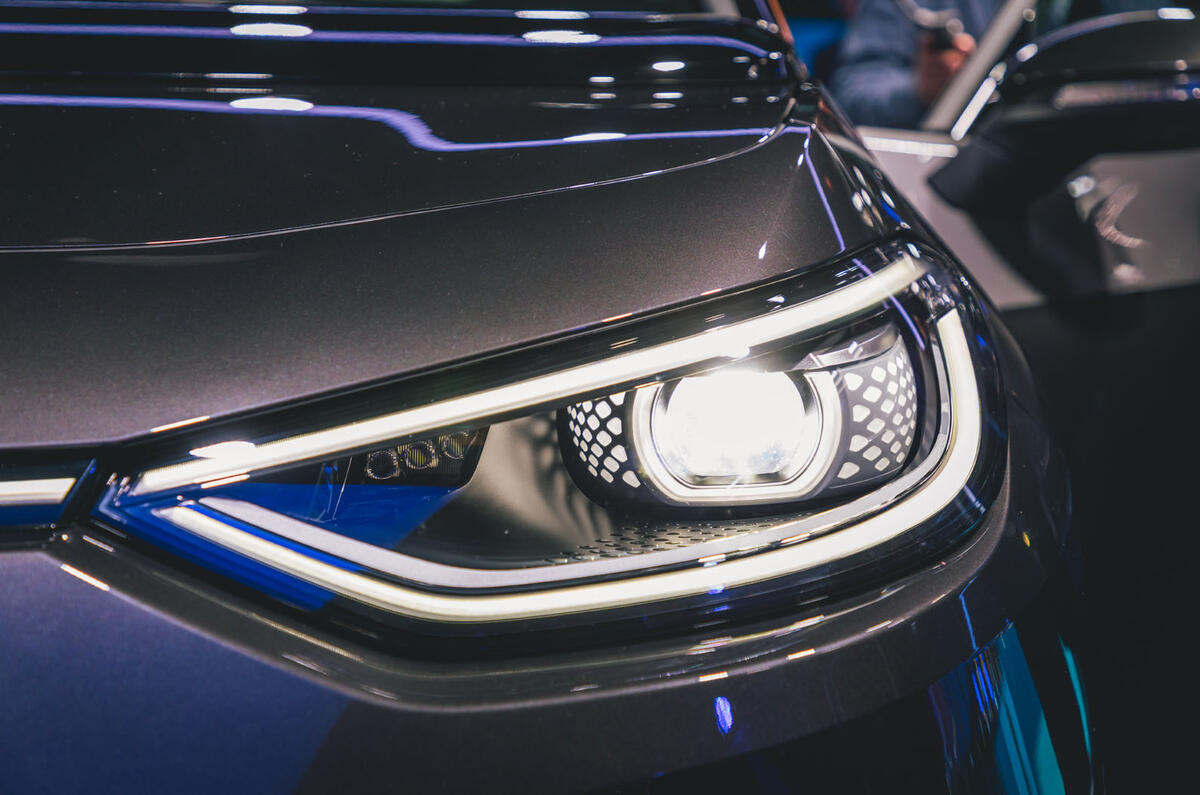
All ID models will make stylistic use of lighting both inside and out


Volkswagen ID 3

Volkswagen ID 3


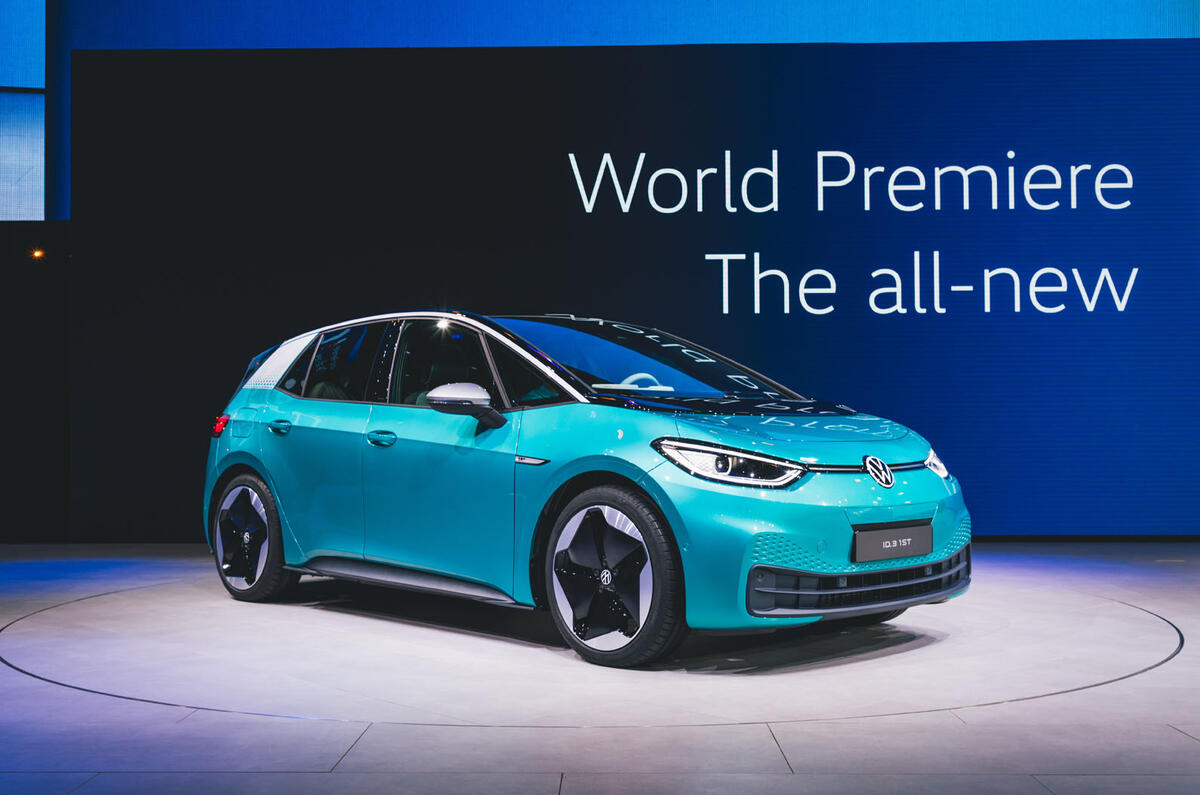
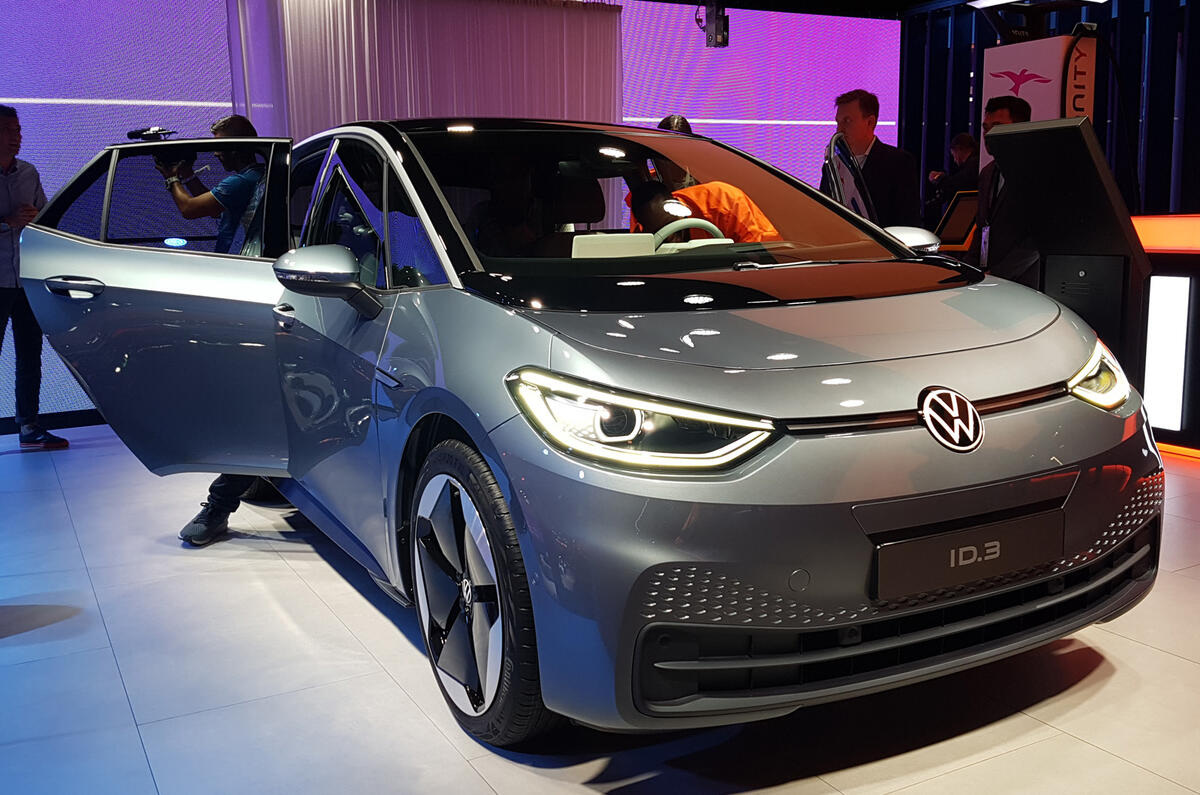
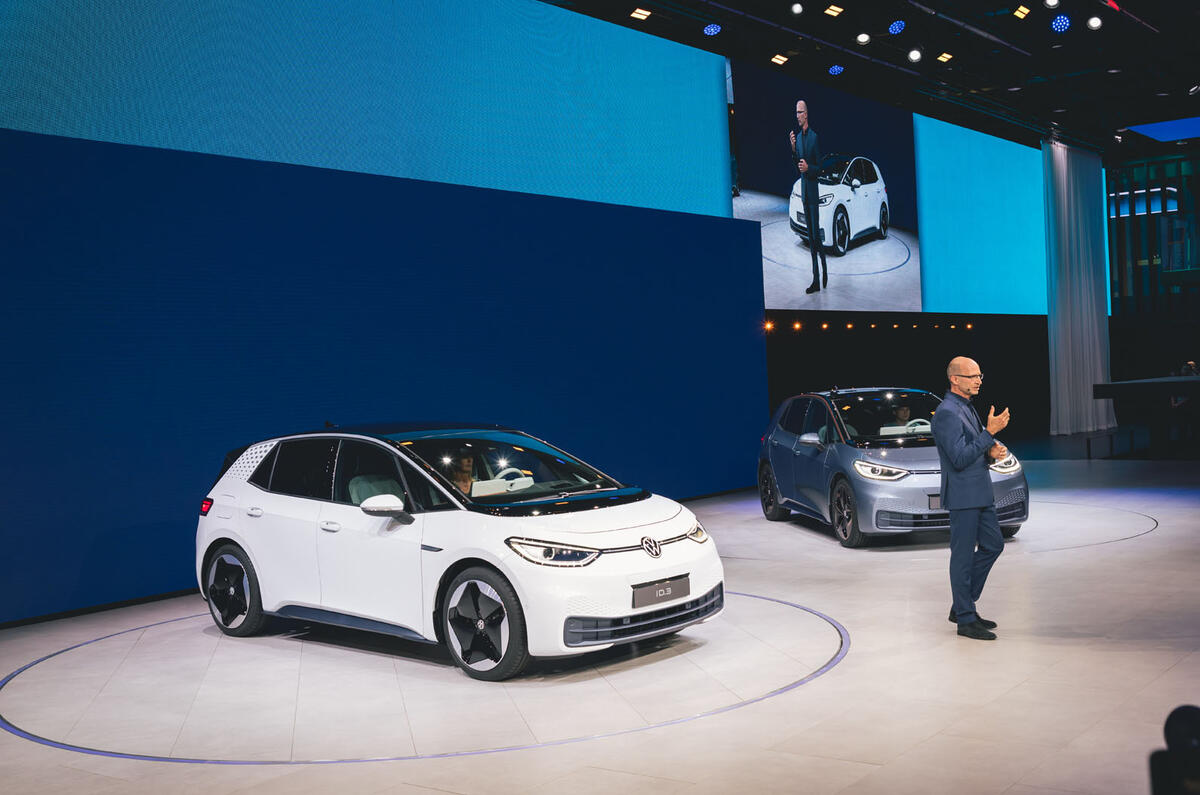
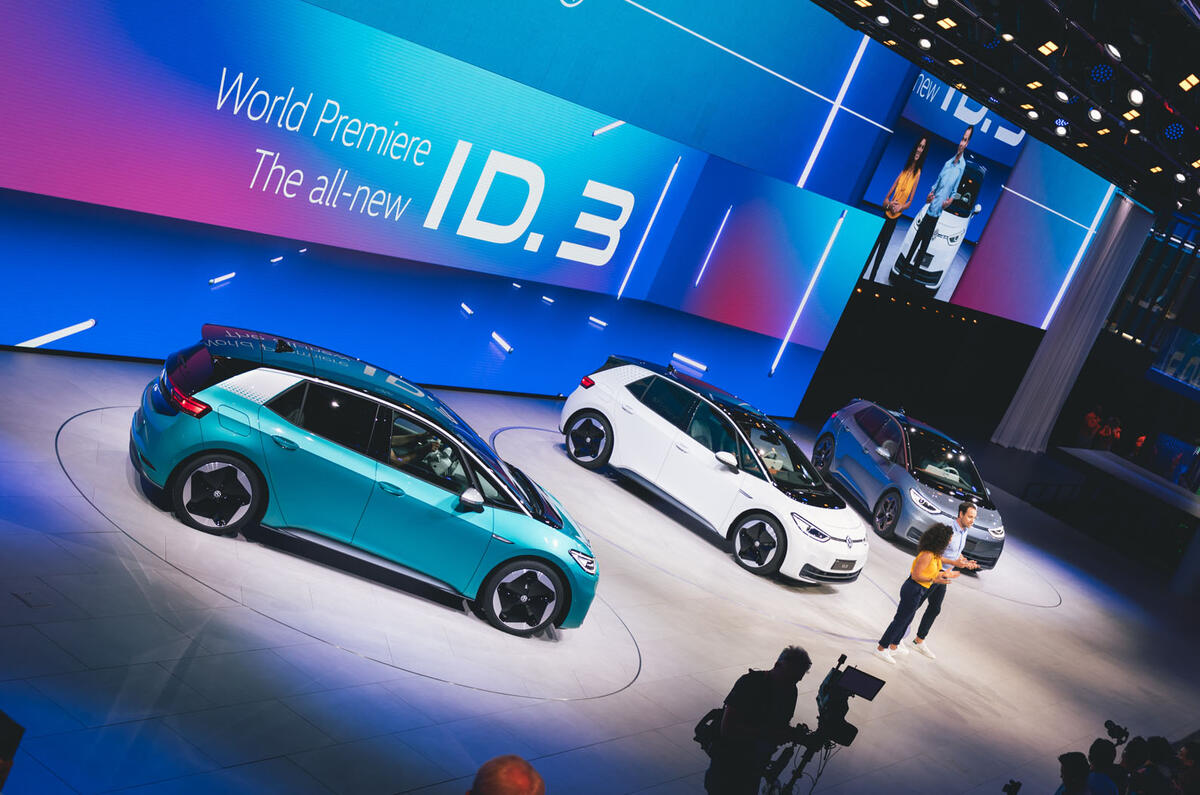
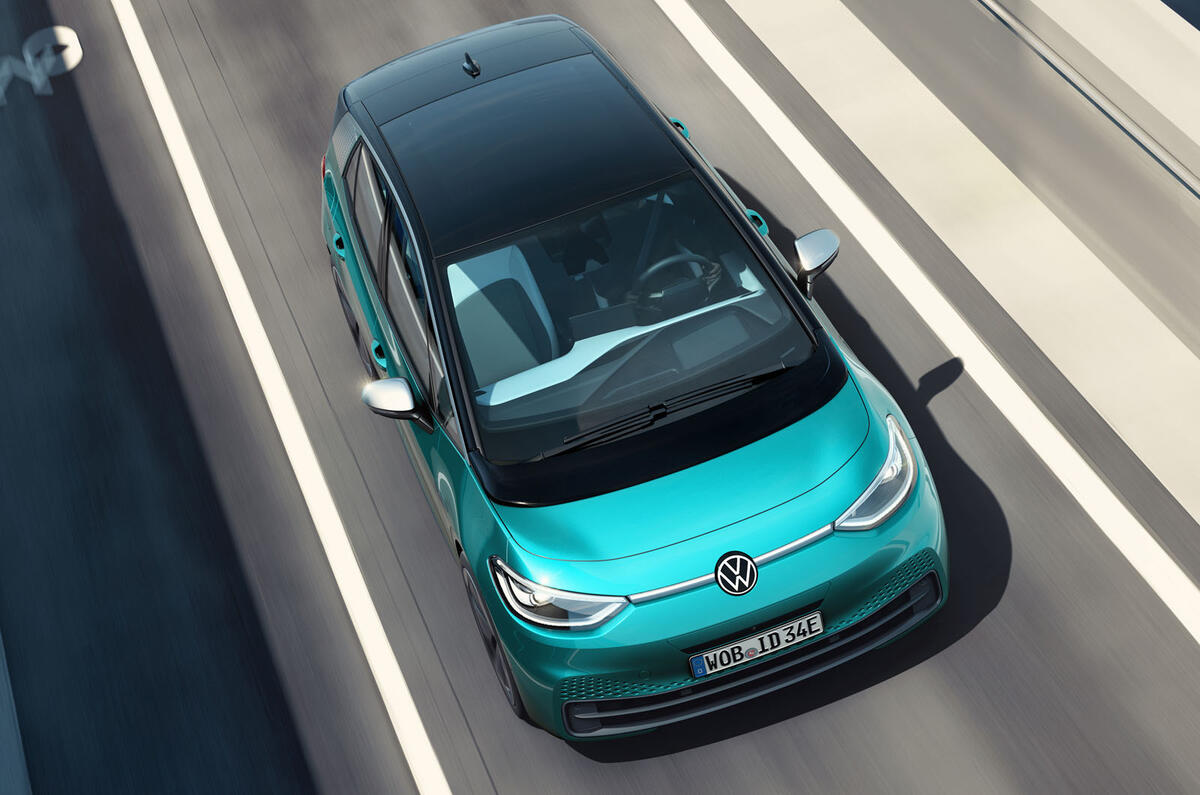
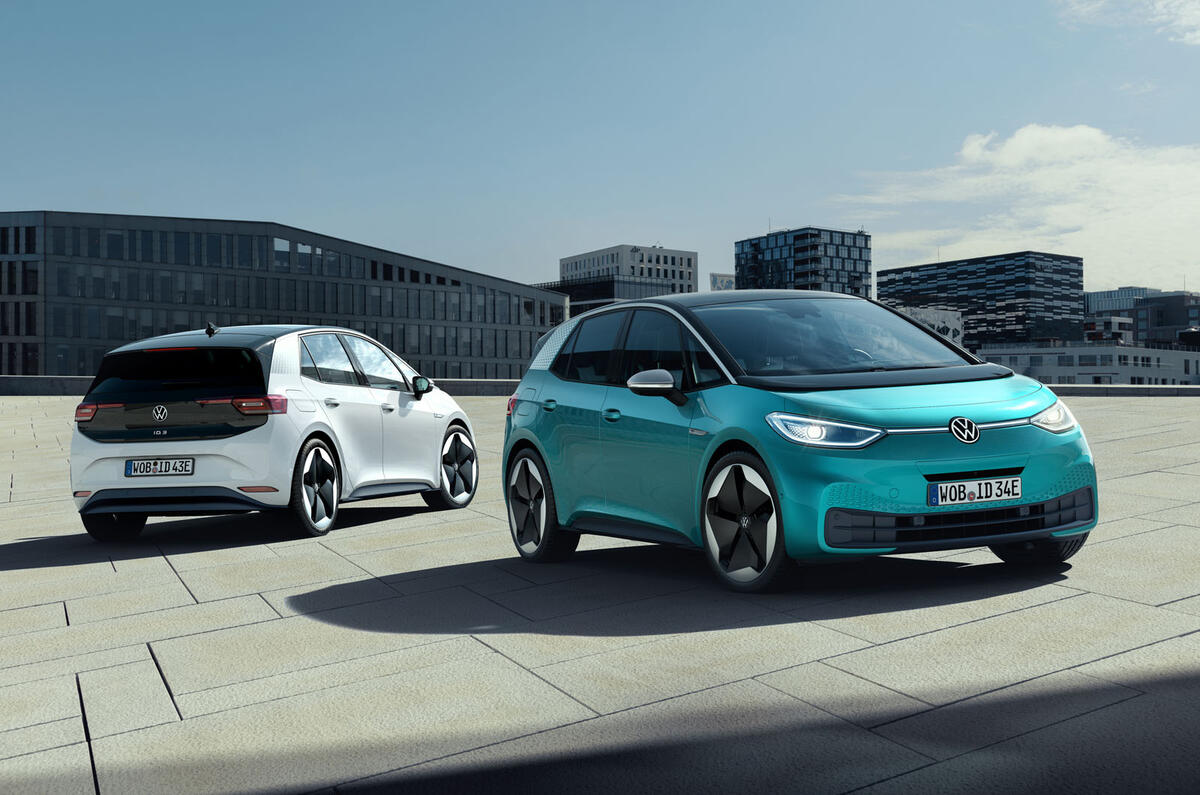
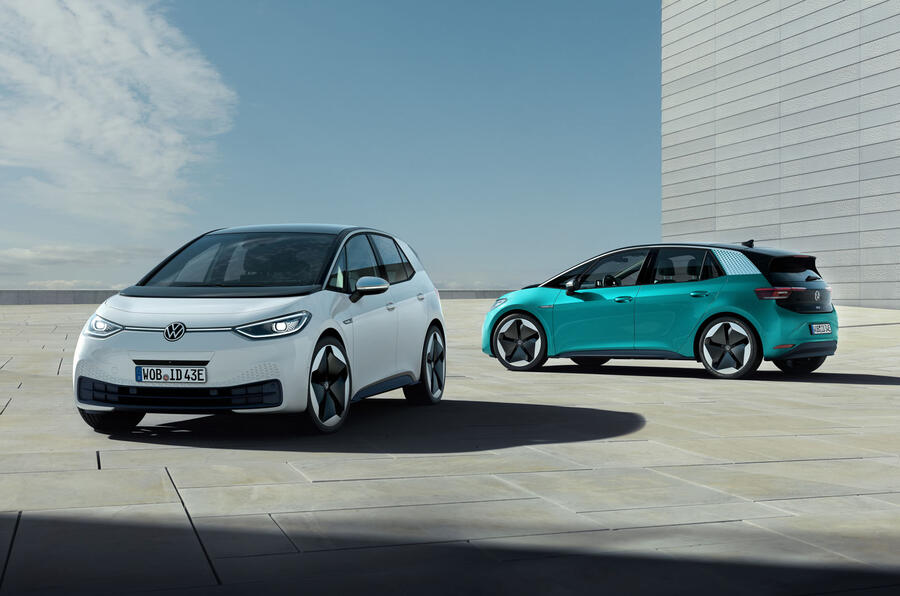
The electric Volkswagen ID 3, the brand’s most important model since the Golf, has been revealed at the Frankfurt motor show, offering up to 341 miles of range and priced from around £27,500.

Initially shown as a concept at the 2016 Paris motor show, the hatchback will be the first ID model to arrive on roads next summer, followed shortly after by the production version of the ID Crozz SUV.

Other members of the upcoming all-electric ID family already seen in concept form include the Buzz, Vizzion and Roomzz, all of which will contribute to the VW Group’s intention to sell three million EVs by 2025. 


Described as “an electric car for everyone”, the ID 3’s importance for VW is spelled out by its explanation of the model’s name. The marque says the ‘3’ signifies “the third major chapter for the brand after the Beetle and Golf”, both broadly considered to be landmark cars for VW and the wider motoring industry.
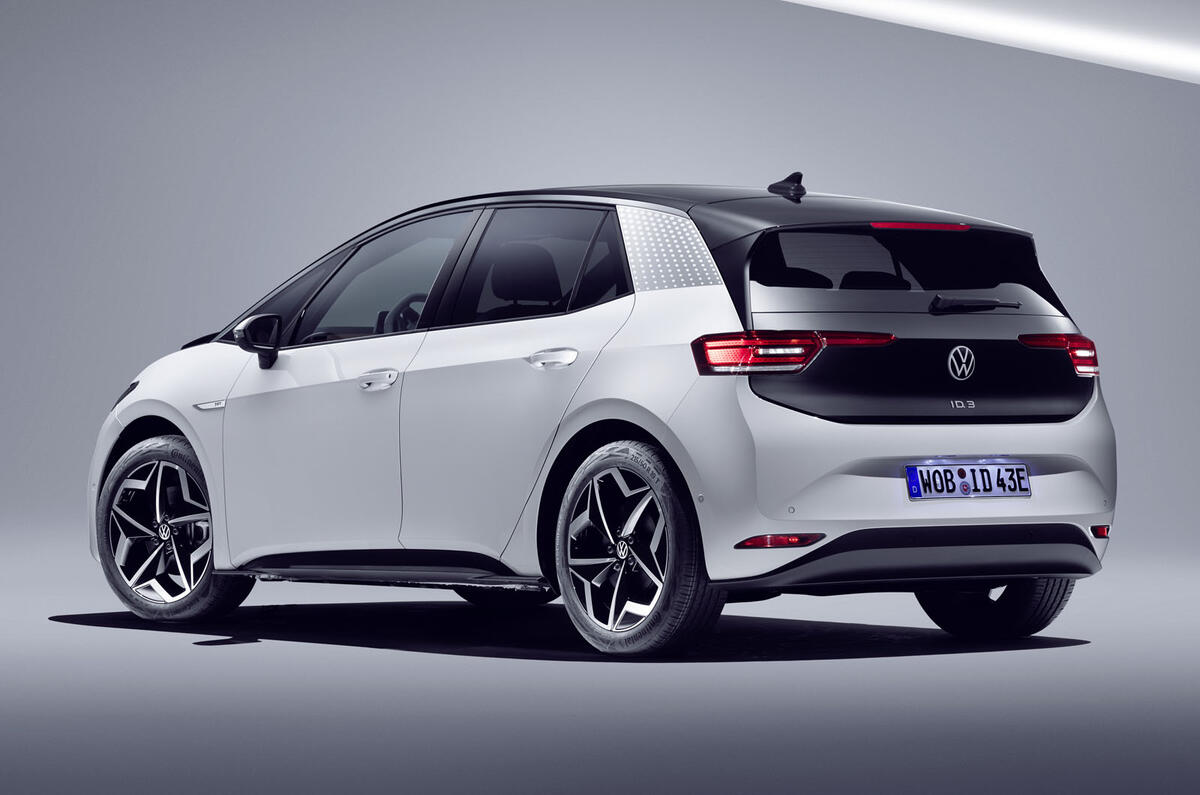
The ID 3 is the first car to use the maker’s new MEB platform, a scalable architecture built solely for electric vehicles, which will underpin all ID models and be used by other VW Group brands. VW is also licensing the platform’s use to other firms, most notably major rival Ford – a move considered crucial in helping to recoup the vast costs of developing the chassis and lower prices through greater economies of scale.

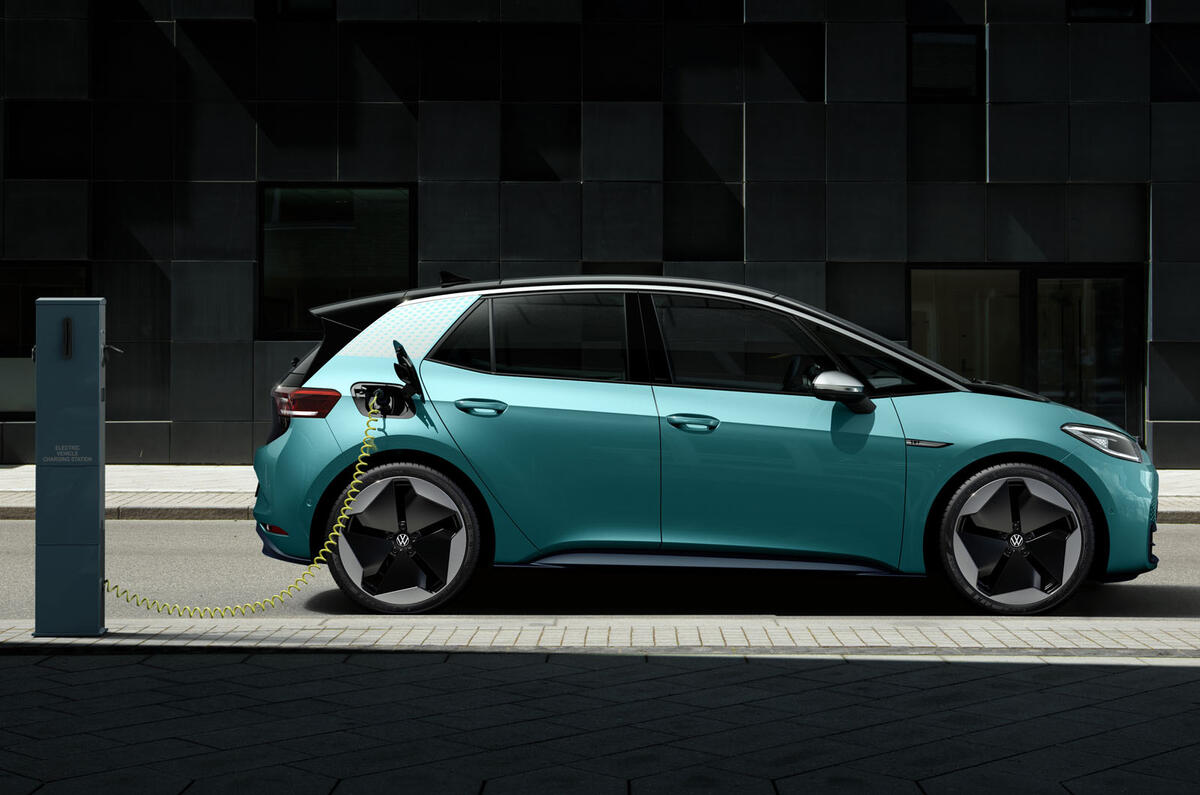
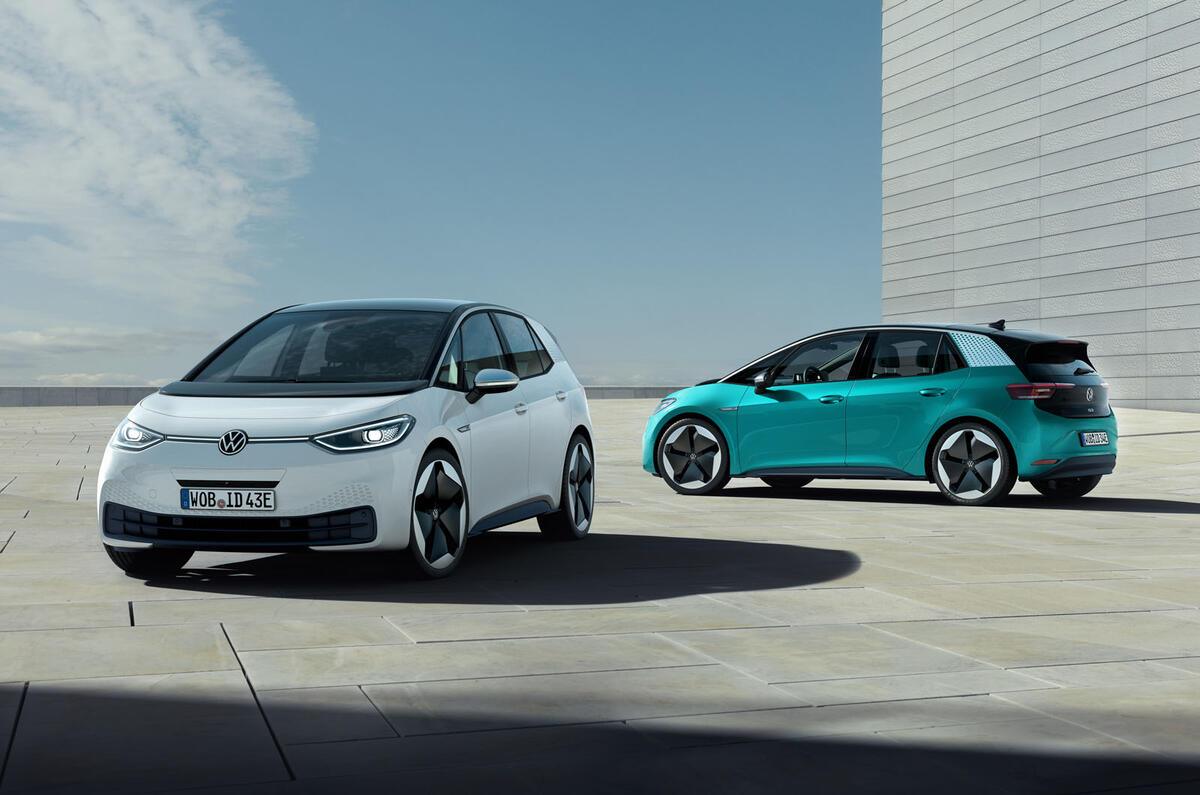
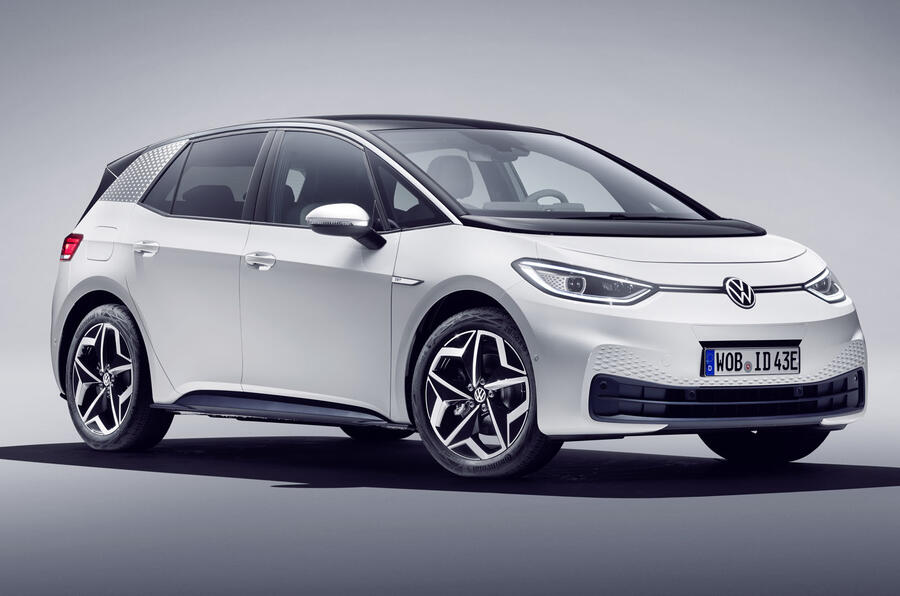
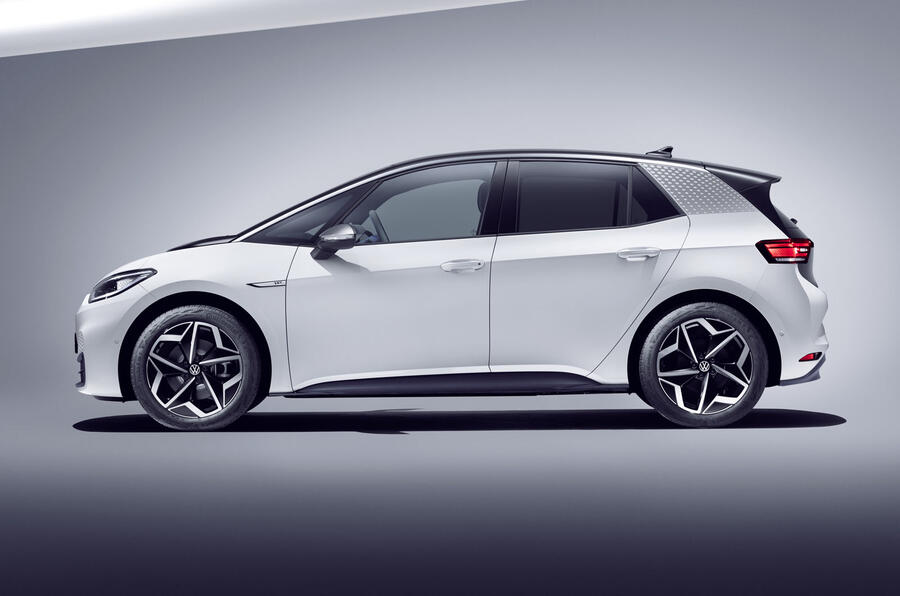
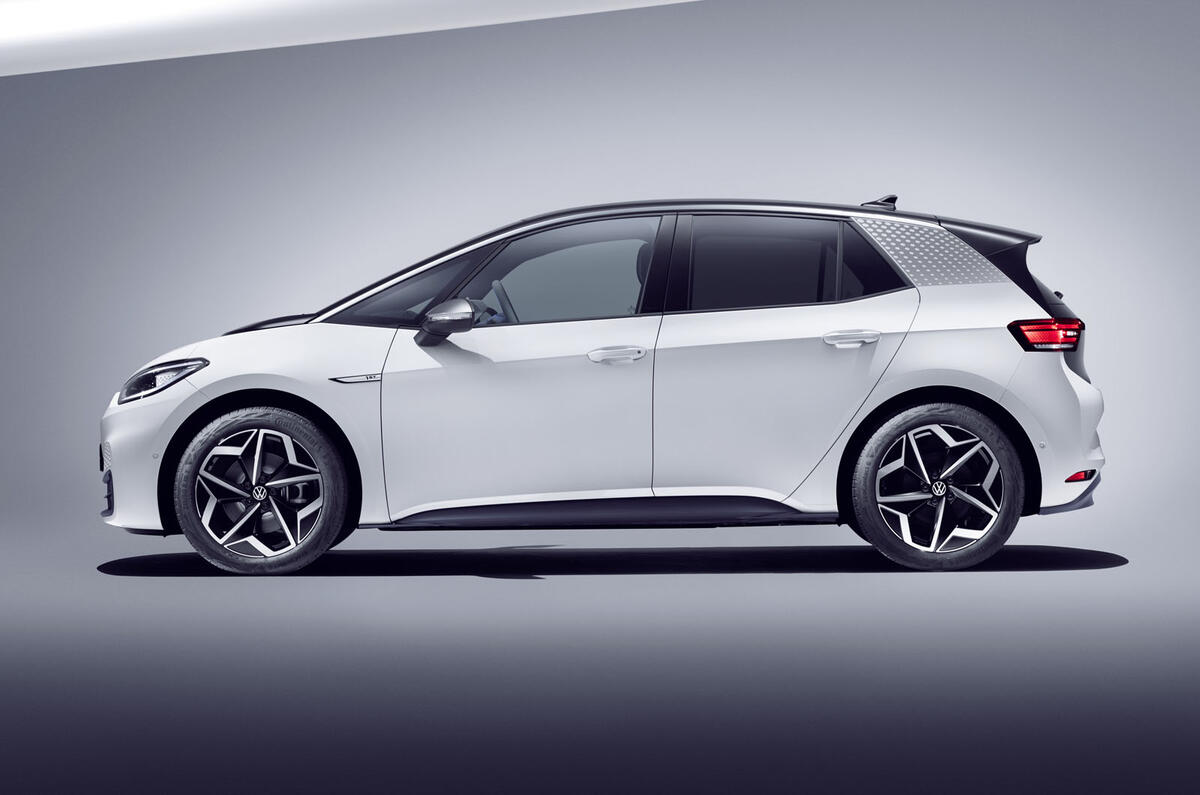
One major benefit of a bespoke electric platform is interior space. While the ID 3 is only 3mm longer, 10mm wider and 60mm taller than the current Golf, its wheelbase is 145mm longer at 2765mm, just 21mm shy of a Passat saloon’s. Boot space is identical to the Golf at 380 litres.


VW design boss Klaus Bischoff said: “The car has unique proportions due to the under-floor battery. With the drive axle at the back, we can have a long wheelbase and short overhangs, with 710mm wheel dimensions – the same as the ID show car.

“We kept the bodystyle from the concept, and the surfaces are very similar to the show car. We’ve kept it simple and only used a few clear lines.”

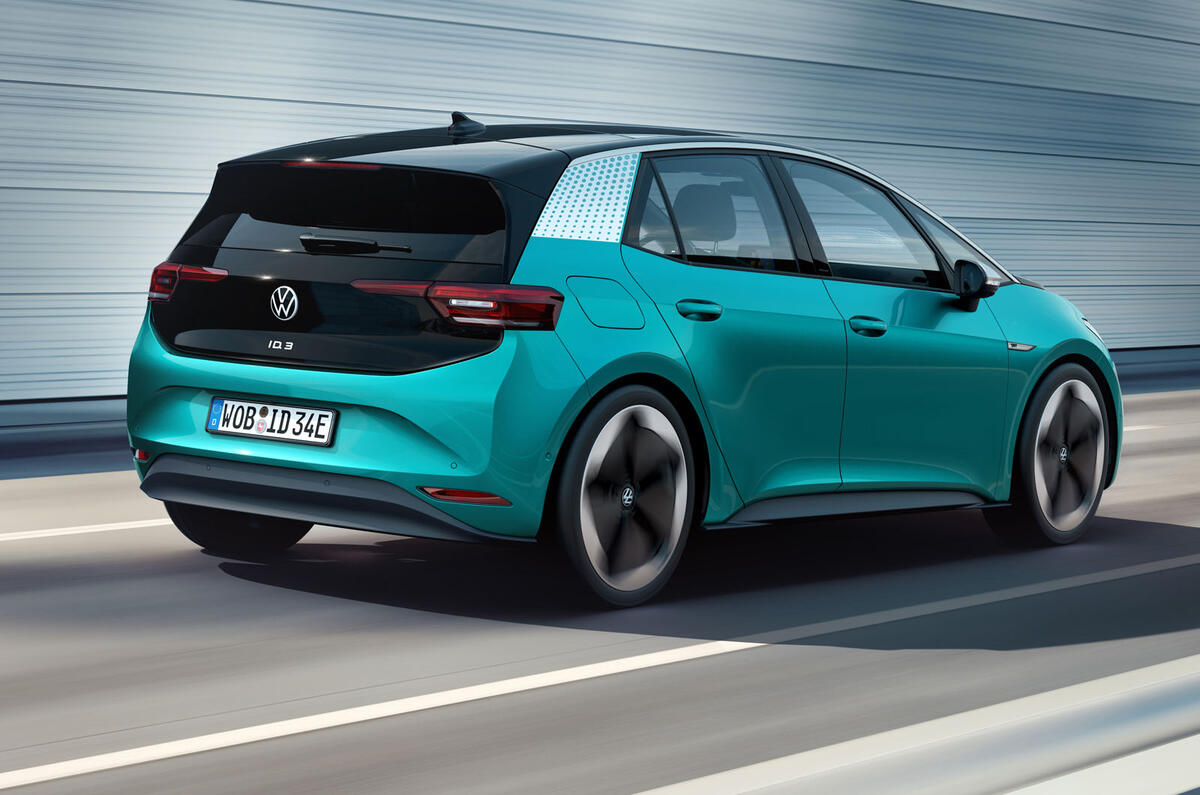
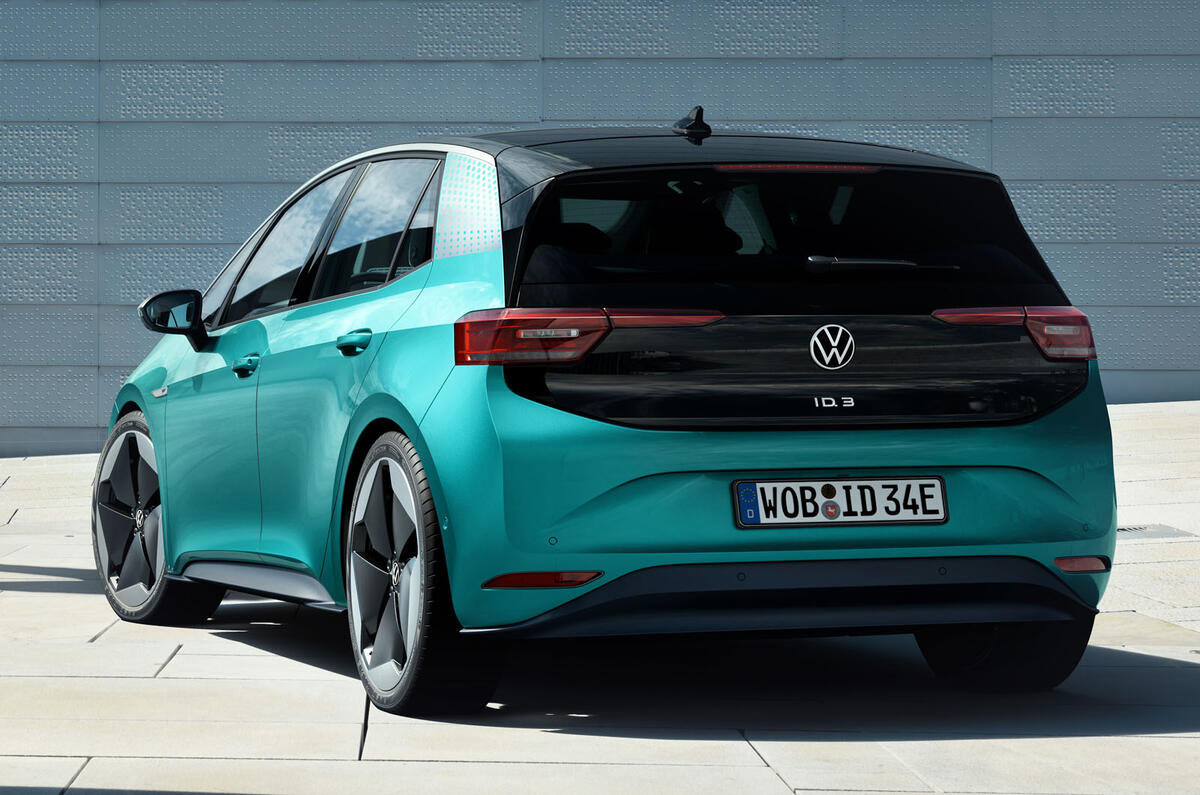
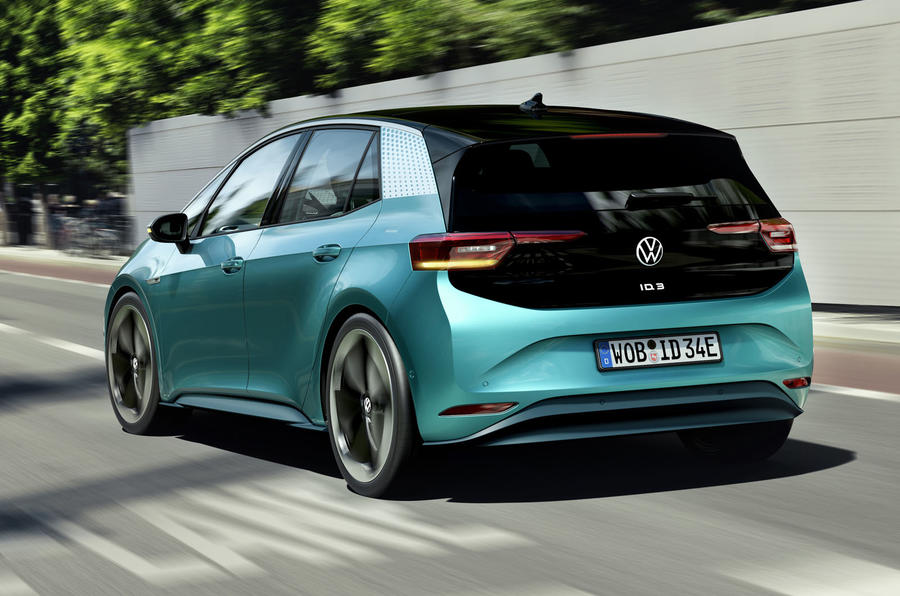
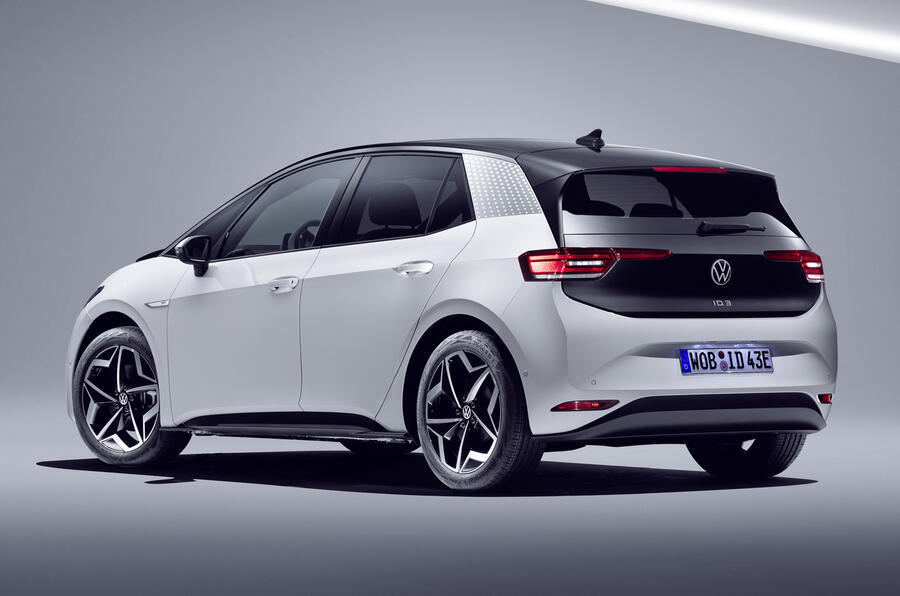
At the rear, there is a large spoiler, required for aerodynamic efficiency. The black roof and rear section made of glossy black plastic seen in these pictures will be standard across all ID 3s.

VW claims the rear-wheel-drive ID 3 will have “intuitive handling” and “phenomenal performance”, the latter thanks to the even weight distribution of the MEB set-up, according to the maker. Early signs are promising: in a recent camouflaged drive of the ID 3, Autocar said the car has the “measured, natural responsiveness in everything it does that so often marks out a VW, and that makes for such easy, top-level drivability”.


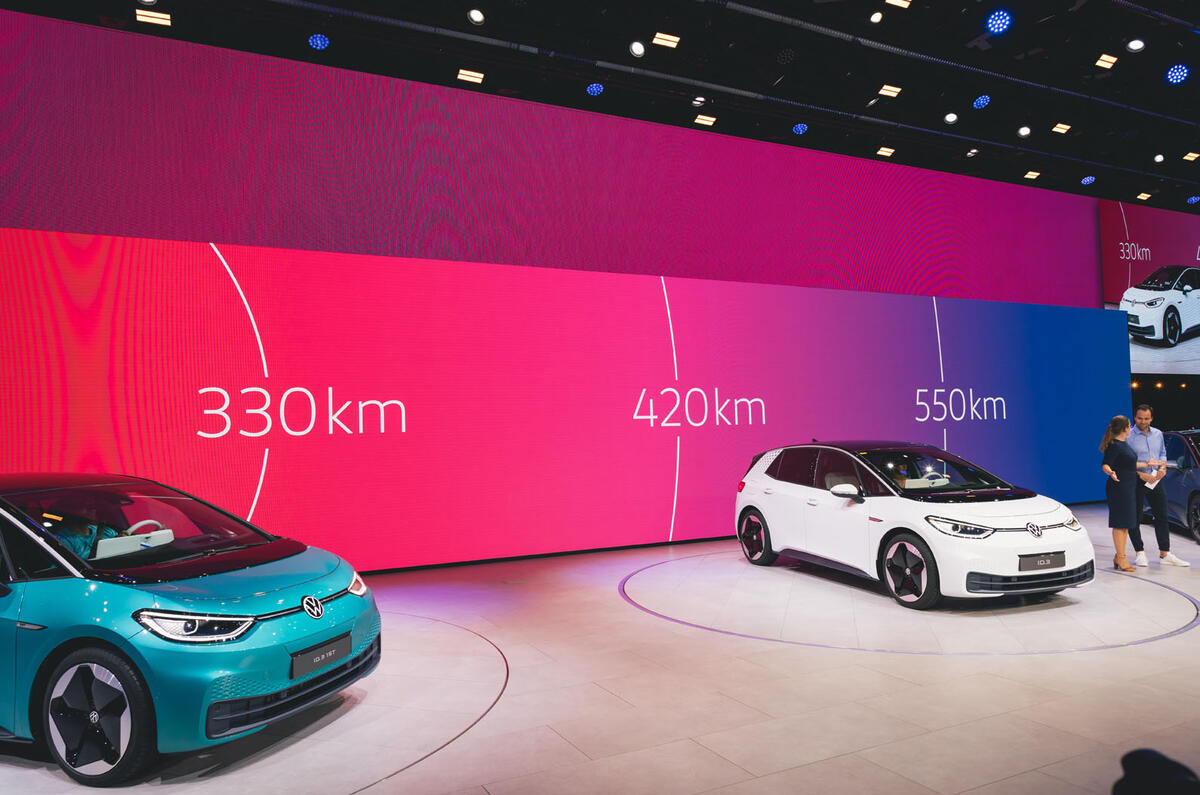
The ID 3 will be offered in three battery sizes with two power outputs from its rear-mounted electric motor: a 45kWh battery with claimed range of 205 miles and 148bhp, and 58kWh and 77kWh batteries both with 201bhp, delivering 260 and 341 miles of range respectively.

Full specifications have yet to be revealed but all variants will deliver 229lb ft of torque, while the entry- and mid-level ID 3s will have a top speed of 99mph.

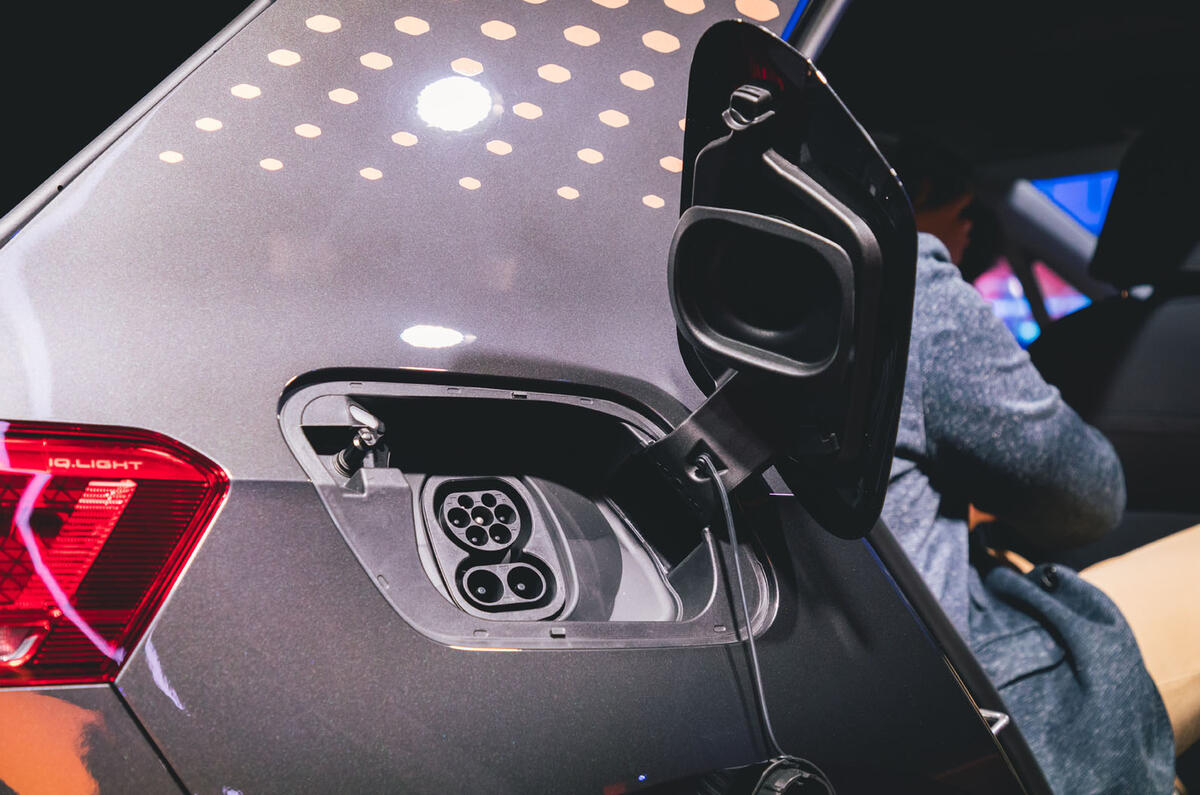
A charging capacity of 100kW will be available on the mid-range ID 3, with a promised charging time of 30 minutes for 155 miles of range. The smaller-battery ID 3 will offer 50kW, but with an optional 100kW. The top-range ID 3 will be capable of charging at 125kW.


VW is guaranteeing the battery for eight years or 160,000km.

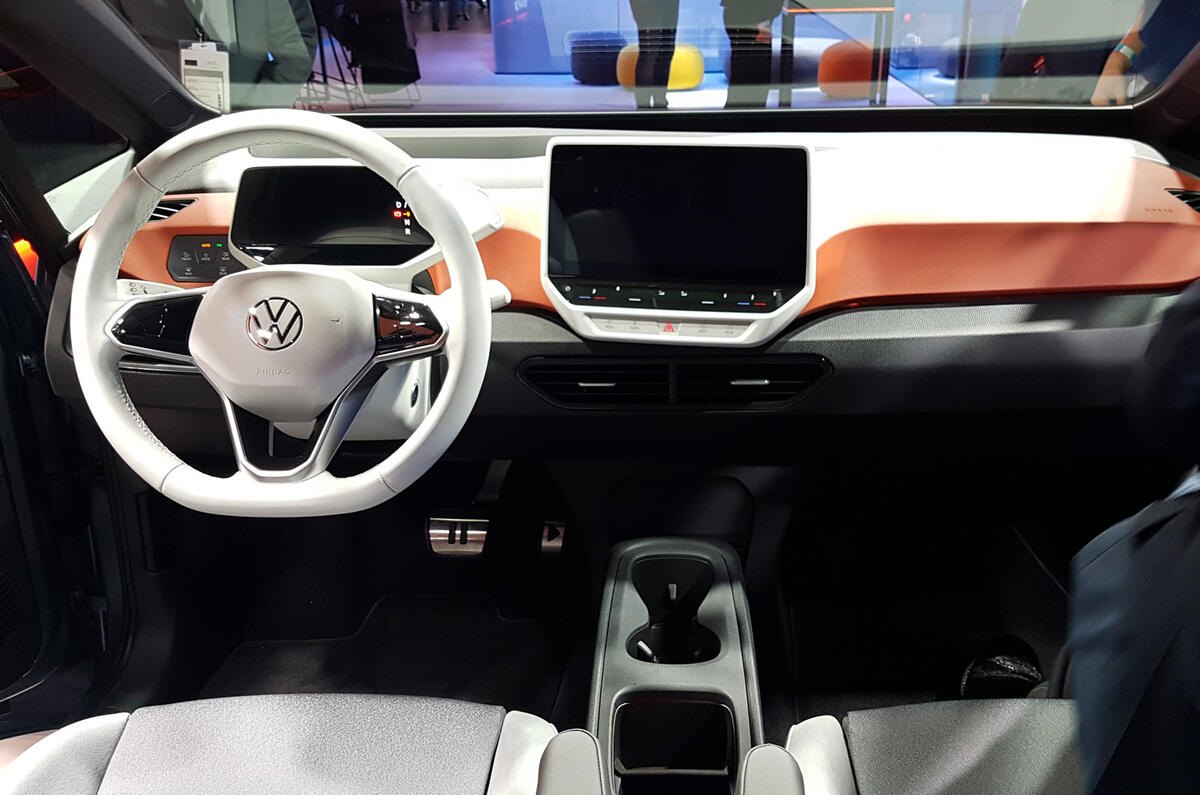
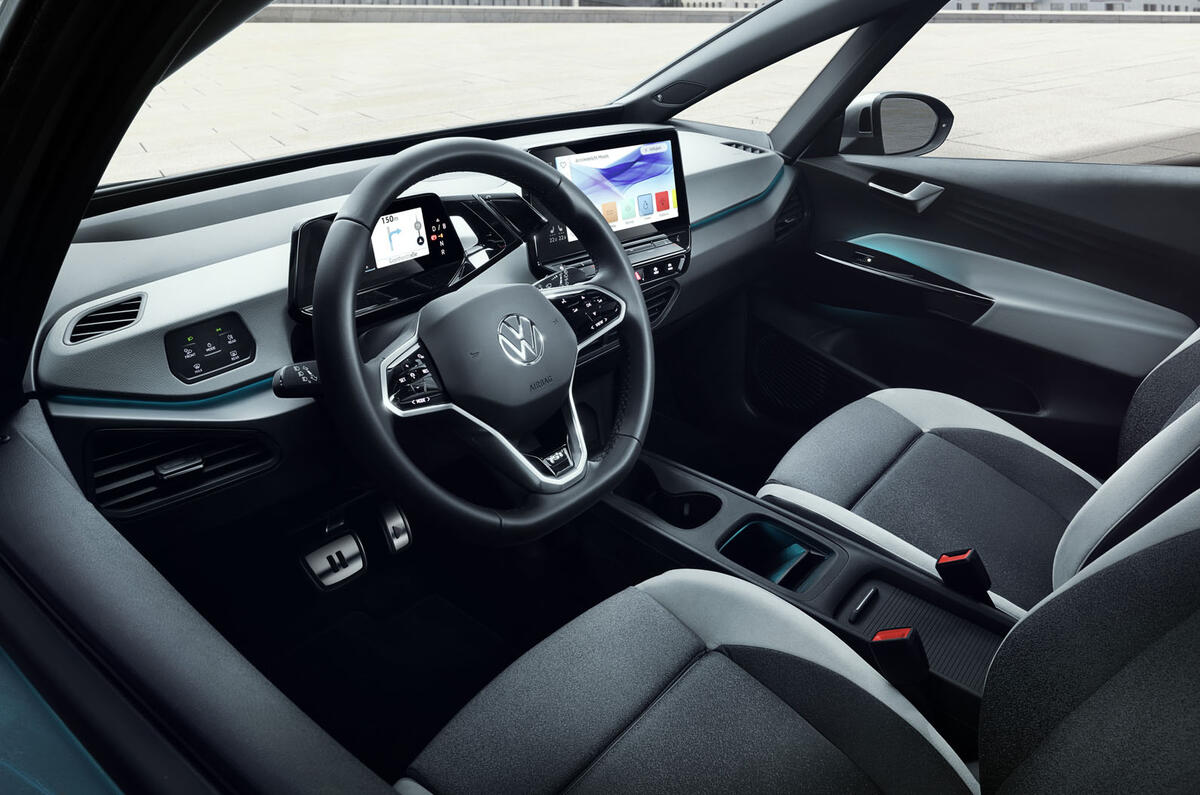
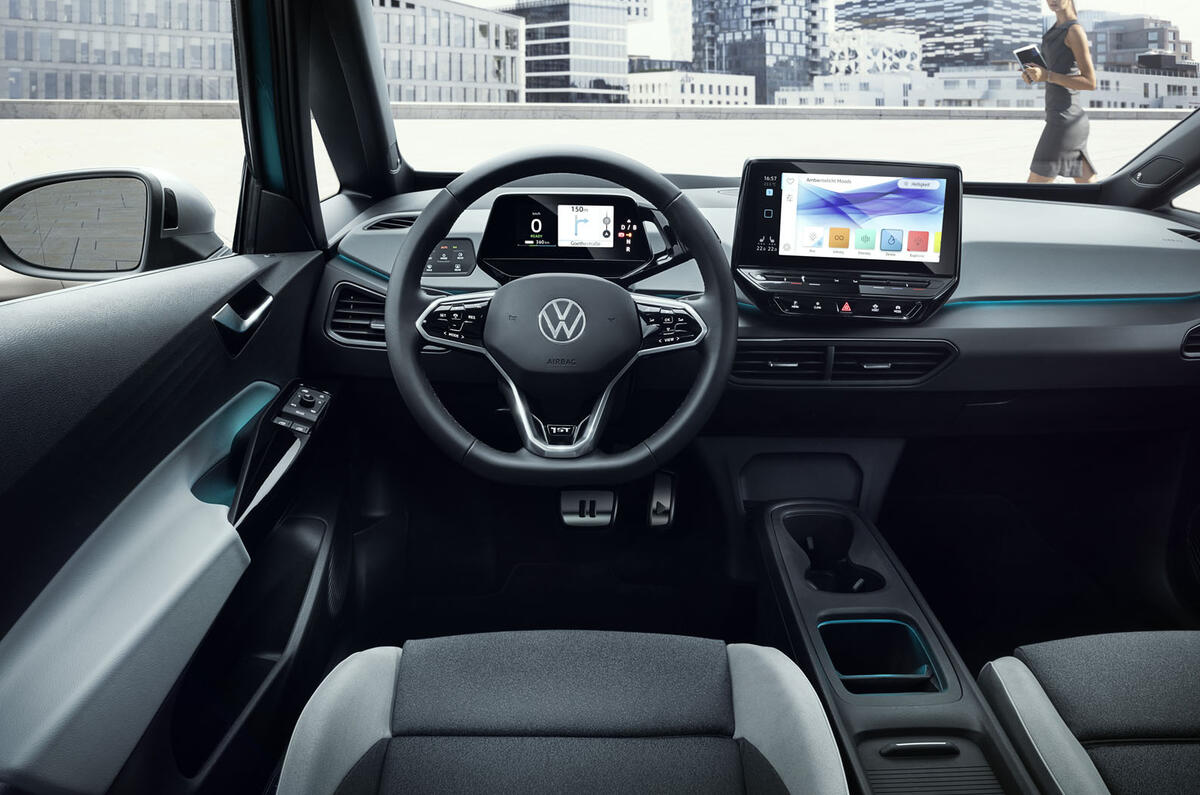
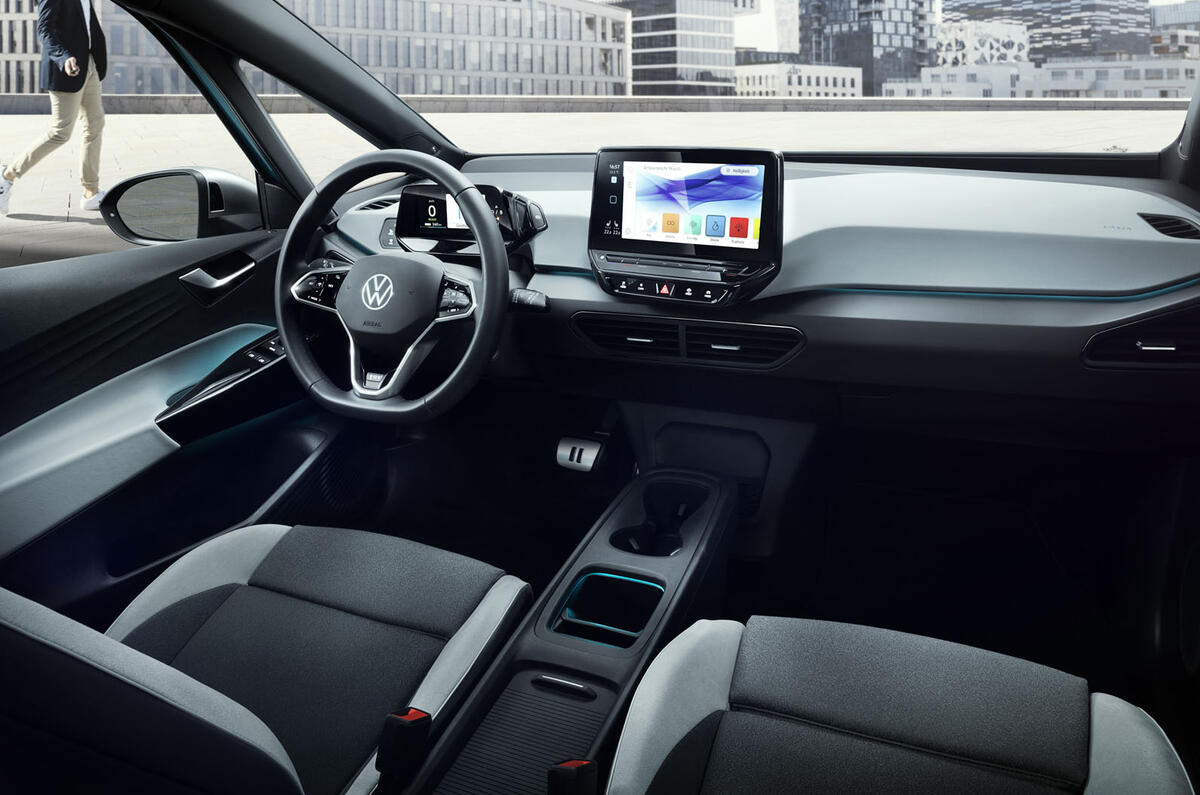
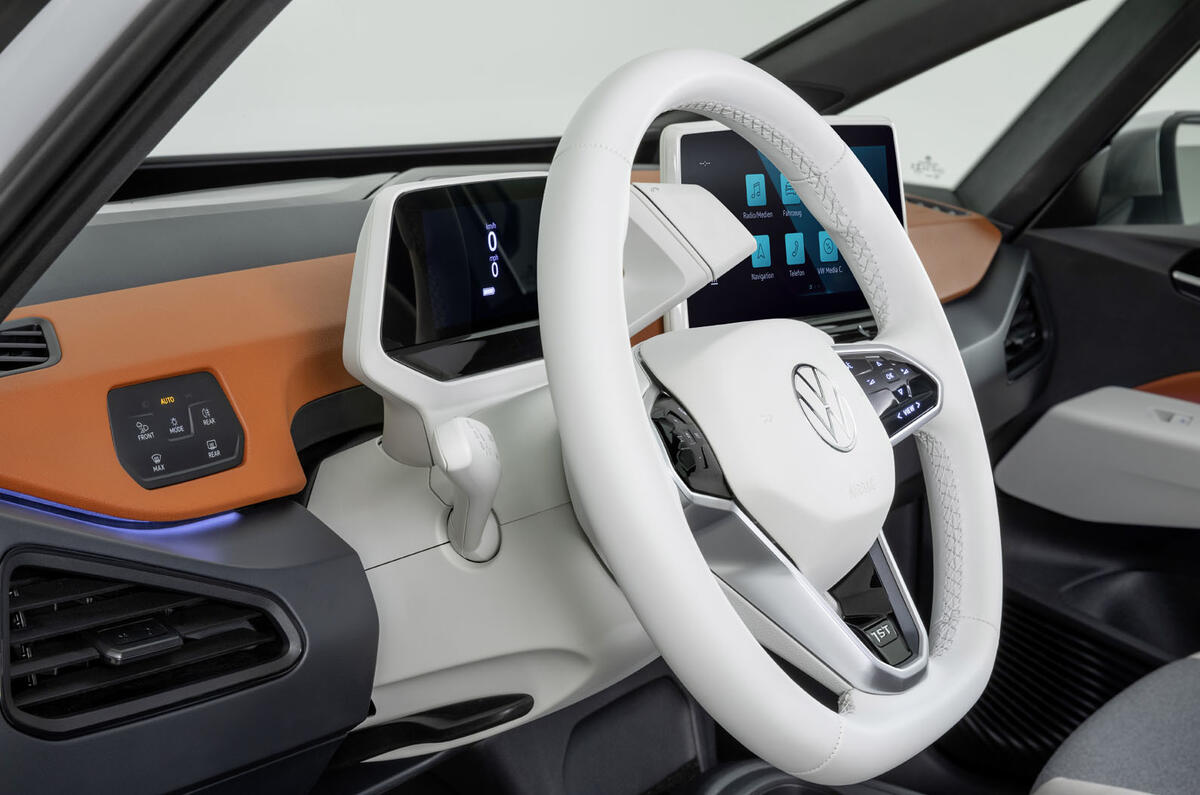
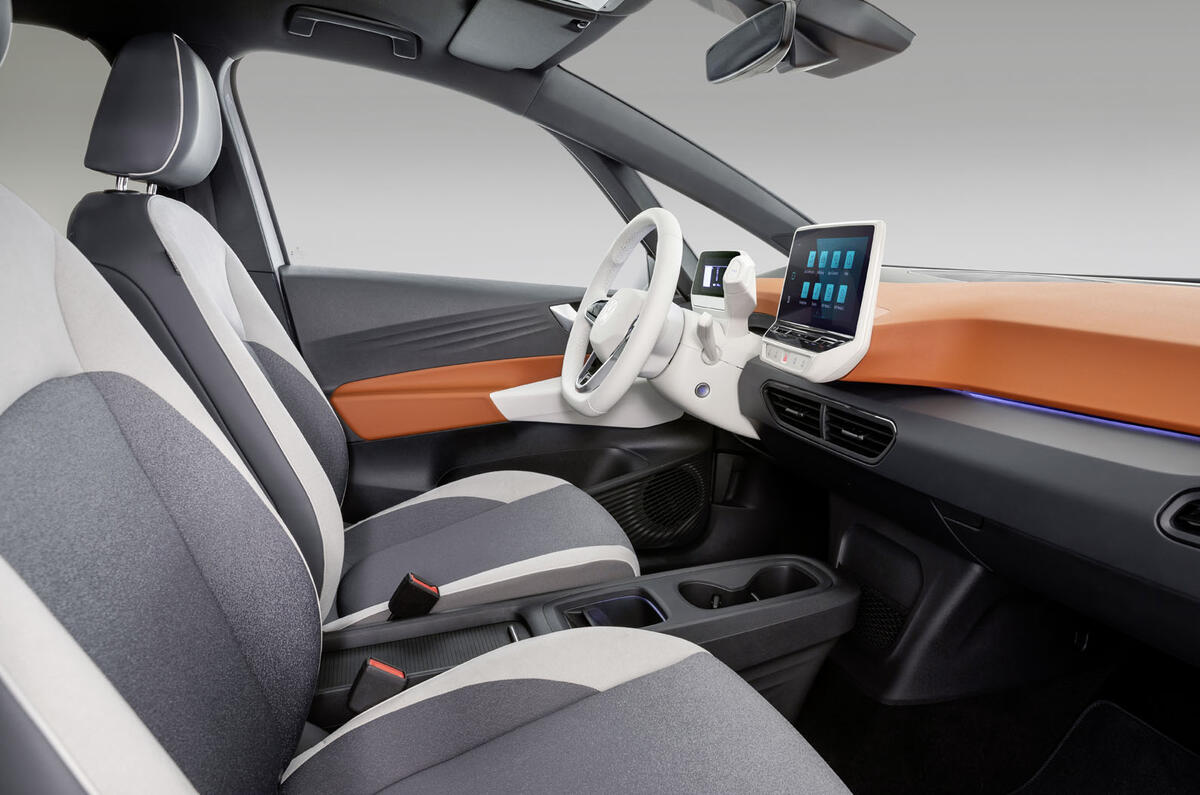
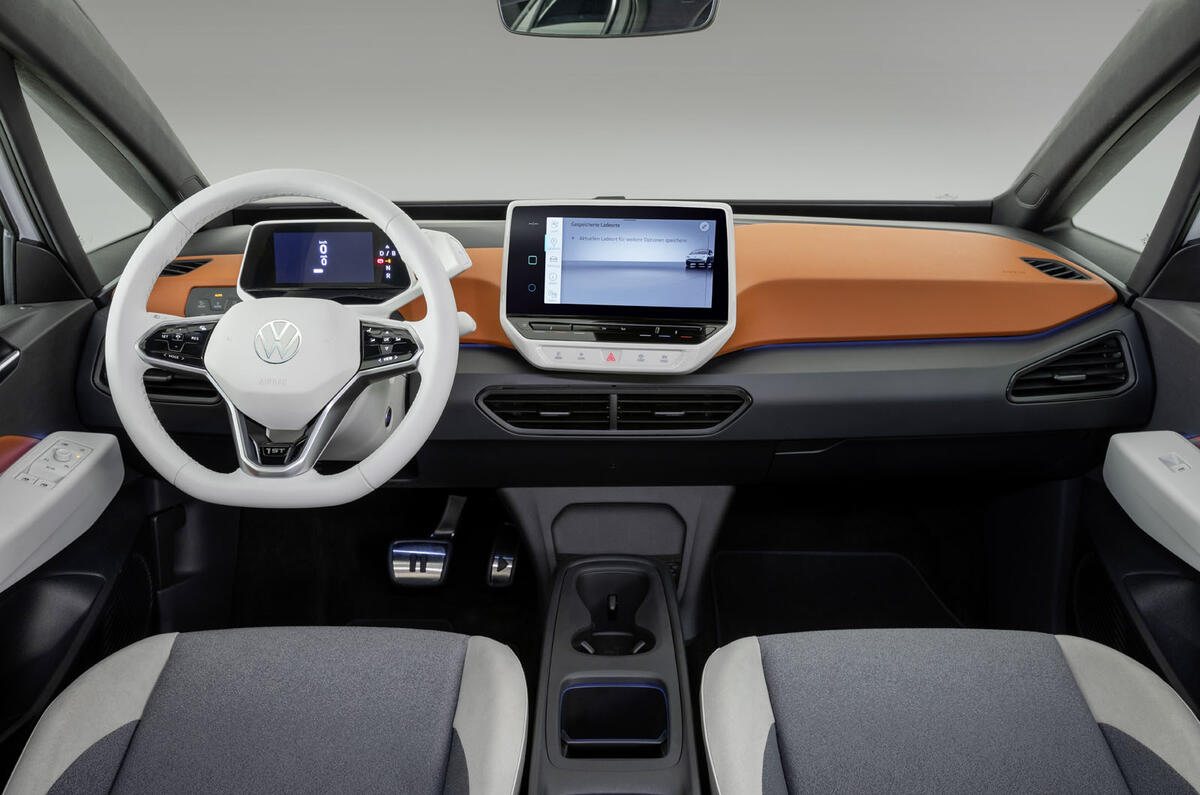
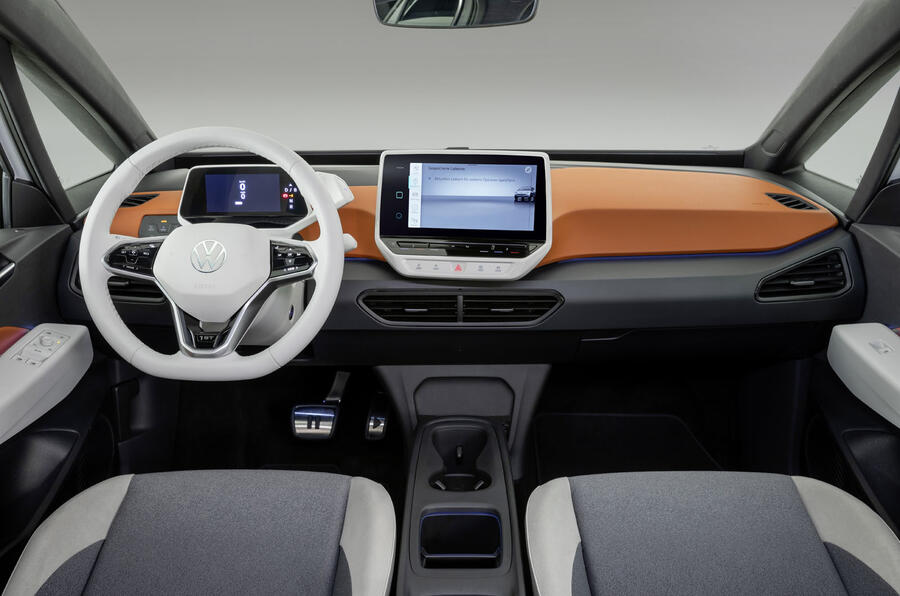
The interior is pared back compared with today’s VW models. Bischoff said: “We’ve also made an internal revolution, with a new design that’s extra-simple and clear. We’ve added value by increasing the amount of space, making it airy and open.”

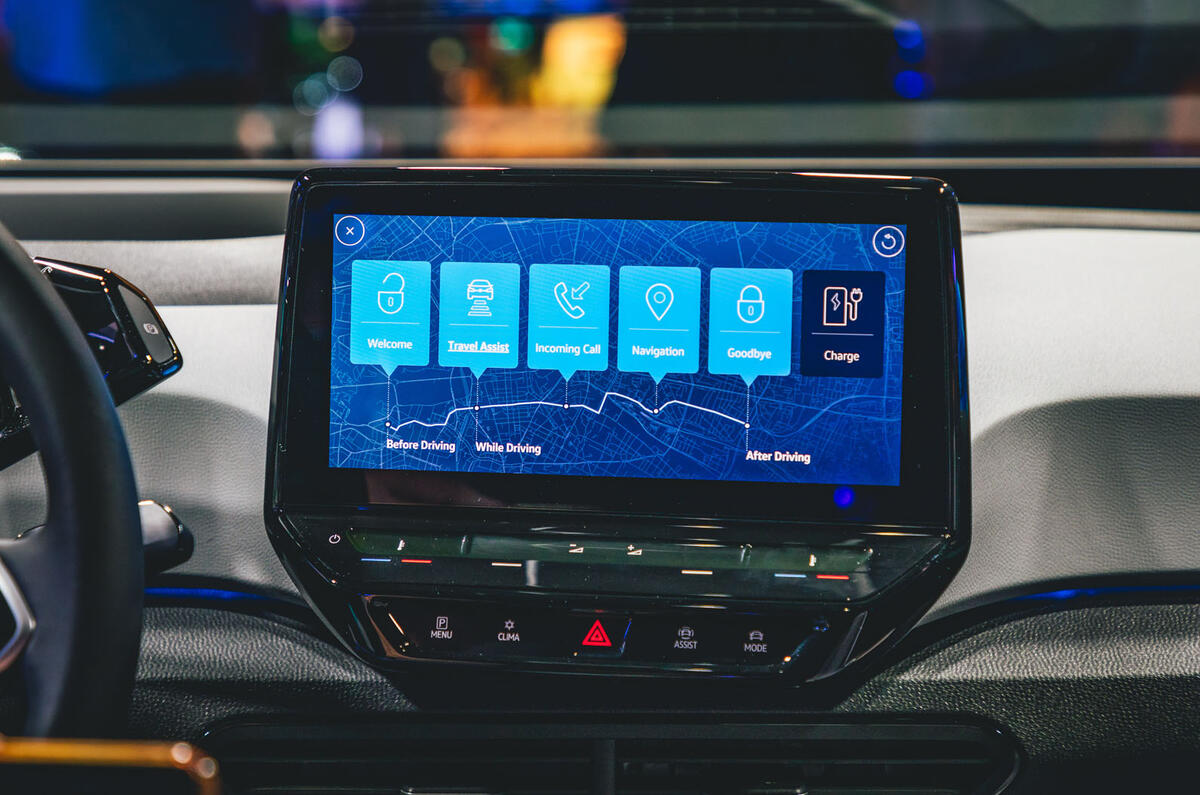
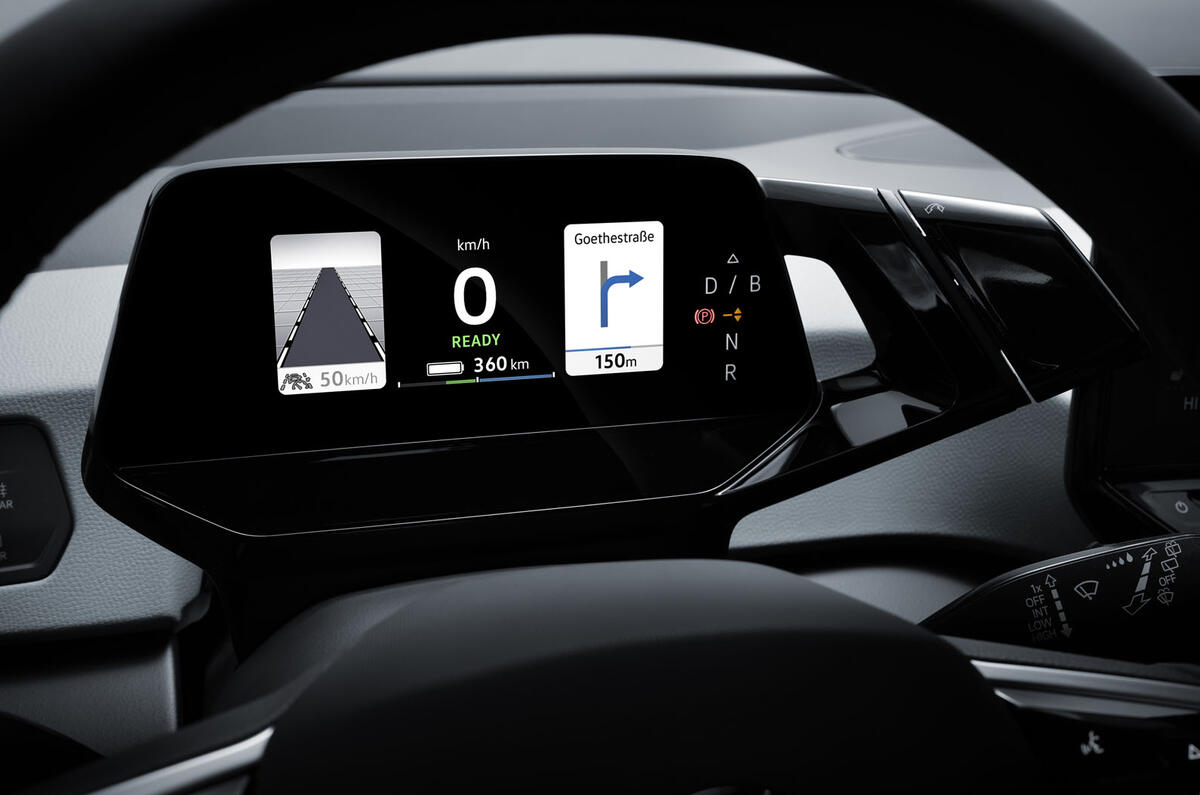
The dashboard is clear other than a 10in protruding central screen as standard, on which systems such as navigation will receive over-the-air updates.


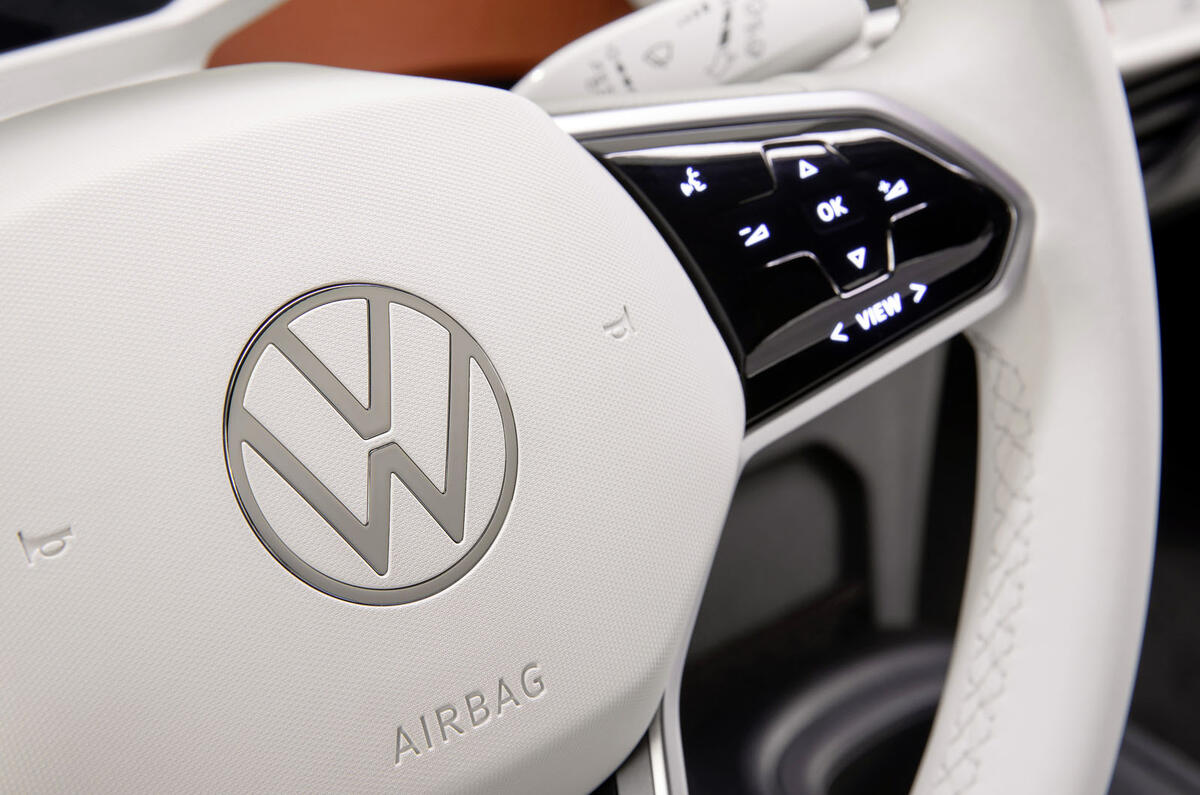
There is an optional augmented reality head-up display, which projects relevant information onto the windscreen. All controls – including those on the electrically adjustable multifunction steering wheel – are operated using touch-sensitive buttons. The only conventional buttons are for electric windows and hazard warning lights.

VW promises next-generation ‘natural’ voice control on the ID 3. For example, an occupant could say “Hello ID, I’m cold” and, in response, the system would increase the in-car temperature.

There will not be traditional VW trim levels, given the maker’s desire to keep the line-up as simple as possible. This is presumably an attempt not to complicate matters for customers, many of whom will be buying an electric car for the first time. However, four option packs are expected to be offered for the UK market.


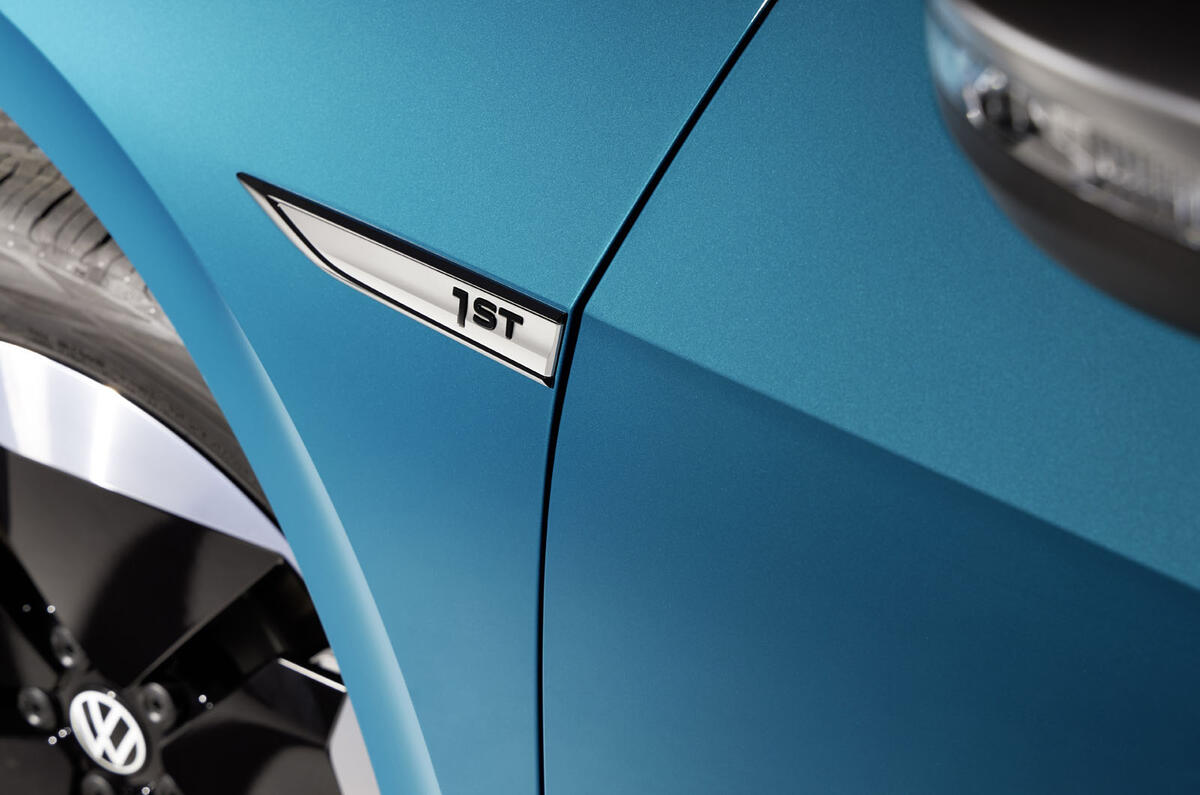
The ID 3 will launch with the 1st edition, powered by a mid-range 58kWh battery. The allocation, unspecified by VW, has already been filled in the UK. VW did say it had achieved its target of 35,000 pre-orders worldwide. The standard ID 3 order books will open next year, with deliveries in autumn.

Priced from around £27,500 before the £3500 government subsidy, the entry-level ID 3 costs on a par with a mid-range 1.6-litre TDI Golf GT when taking the grant into account. Pricing is expected to rise to around £35,000 for the ID 3 1st edition.

The ID 3 is the first carbon-neutral model made by VW, according to the maker. It said all elements of manufacture and distribution will be powered by renewable sources or compensated by certified climate projects. The model will be produced at VW’s Zwickau plant in Germany, which is set to produce 330,000 electric cars annually from 2021.

Could VW increase or decrease the range offered by these three batteries?

“I [personally] only need 60km of range today. We will have to see how the market reacts. We predict the middle battery size will be the most popular.”

When will we see an ID 3 GTI?

“We are definitely thinking about this. We won’t have the same line-up as Golf. We are trying to keep it simple. But obviously we are thinking of performance versions of ID cars, especially in higher ID models where you get four-wheel drive – that would be a lot of fun.”
When do you expect there be volume parity with the Golf?

“The Golf is still at the fore of the brand. ID 3 is the little brother able to go out and explore and be the cooler [sibling]! I can’t say when it will reach parity.”


When will VW introduce wireless charging for its EVs?
“Not on this ID 3, but we are looking at much less than 10 years. VW is not a premium brand. The preparation [for wireless charging] in a garage is very expensive today. This might be why premium brands are further along the line [than us] but we are talking about it.”
Read More